Awards
2015 Finalist – The Community of Literary Magazines and Presses Firecracker Award 2015 Finalist – Longlist PEN/Diamonstein-Spielvogel Award for the Art of the Essay


2015 Finalist – The Community of Literary Magazines and Presses Firecracker Award 2015 Finalist – Longlist PEN/Diamonstein-Spielvogel Award for the Art of the Essay

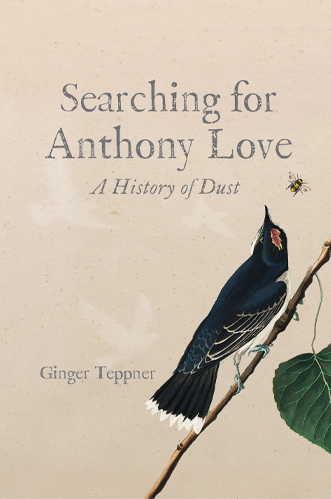
In the tradition of Virginia Woolf and Clarice Lispector, Searching for Anthony Love is a daring, lyrical novel that follows a woman grappling with the presence of a beloved who has died.
Told through fragments, meditations, and moments of startling clarity, the book traces how love continues to shape consciousness long after its object is gone. Searching for Anthony Love explores the interior spaces where longing, embodiment, and spiritual inquiry collide--where sadness becomes a location, vulnerability a form of knowledge, and the body both a shelter and a site of fracture.
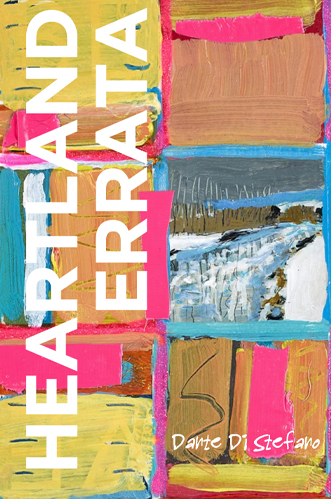
A love note, forged in the griefs and joys of family life, to the damaged world and to those who live in poems.
Through sonnets and unsonnets, prose poems, and formally inventive lyrics, Di Stefano explores the shifting boundaries between confessional and anticonfessional writing, drawing unity from his experience of suburban fatherhood. The book celebrates a wide constellation of artists, from Ruth Stone and Brigit Pegeen Kelly to John Coltrane, Dolly Parton, and Charles Mingus, while grounding itself in the everyday textures of a life: a child's drawings, a whale's song, a 1986 Mets game, an untranslated Montale poem.
Together these moments form the broken, capacious, and sincere country of the human heart.
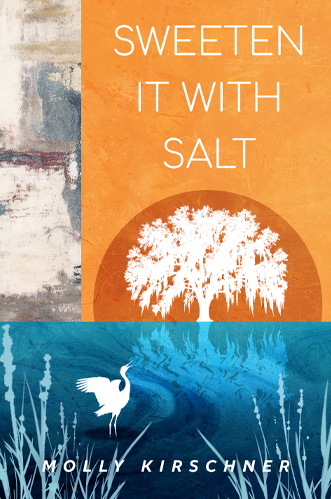
A luminous collection of poetry by Molly Kirschner that navigates the delicate intersection of the mundane and the metaphysical.
Set against backdrops ranging from the vibrant, storm-swept streets of New Orleans to the quiet, dusty corners of domestic life, these poems explore the "huge amoebas of time" that accrue in the spaces between our intentions and our reality.
With a voice that is both wryly comedic and deeply reverent, Sweeten It with Salt investigates the persistence of beauty amidst "unpardonable deeds," "stupid mistakes," and the "slow dance" of decay.
Whether she is playing "Sisyphus to a raisin" under a kitchen table, witnessing a "genderless god" in a Sikh temple, or contemplating the quantum entanglement of the soul, Kirschner consistently seeks the "nearest beautiful thing" and gives us a defiant and joyful act of mockery against the void.

When a vision disorder stole his ability to read, Will Dowd found himself exiled from the world of books—until he discovered an unusual path back through the landscape of dreams. Armed with an experimental dream-inception device from MIT, Dowd embarked on a yearlong odyssey into his own unconscious.
The Taste of Rain in Buenos Aires chronicles twenty extraordinary dream narratives born from this first-of-its-kind experiment. A service dog navigates grief after his owner's death. A time-travel tour guide loses tourists across centuries. An alien researcher falls in love with Earth despite himself. The stories in this collection emerge from a mind at its most unguarded, each one intimate, strange, and deeply human.
Part literary experiment, part exploration of consciousness, The Taste of Rain in Buenos Aires reveals how dreams, like books, can become portals to other worlds—wild, untamable places where the impossible is married to the everyday and even exile can become a form of homecoming.


In Leaves Borrowed from Human Flesh, the solipsistic self gives way to a language which attempts to recover the female body’s experience of place, and of the human and non-human creatures which inhabit it. The ethical dilemmas of representation are framed by a consciousness which allows itself to be permeated by whatever lies outside it, impinging on its boundaries to make them fluid, plural, at times, evanescent.
Divided into four sections which highlight an unmistakable female consciousness engaging with vast natural landscapes in four different continents, the collection’s evolution is towards a subtle form of resistance where anthropocentric certainties are interrogated. What starts as left-margined free verse, often using ekphrasis to highlight gender violence and resistance, leans increasingly towards the playful and experimental, at times adopting metre and traditional forms in combination with found poetry and erasure so as to destabilize the boundaries between genres. By the end of the collection, the page is no longer a mechanism for order and structure, but instead, evolves into a canvas and visual field, challenging the social order through language itself.
In Abigail Ardelle Zammit’s third collection, suffering, mortality and environmental degradation are inseparable from the poet’s relentless search for meaning. Relationships, aloneness and connectedness must be probed as inexhaustible themes in the vast trajectory of existence. Each poem is a question, an exploration of what can be unearthed through linguistic play, as well as an attempt to decolonize the self from a language that is always on the verge of running dry.

