|
|
|
|
|
“Death adds an inevitable gravitas to anyone’s story." - Myrna Stone
|
|
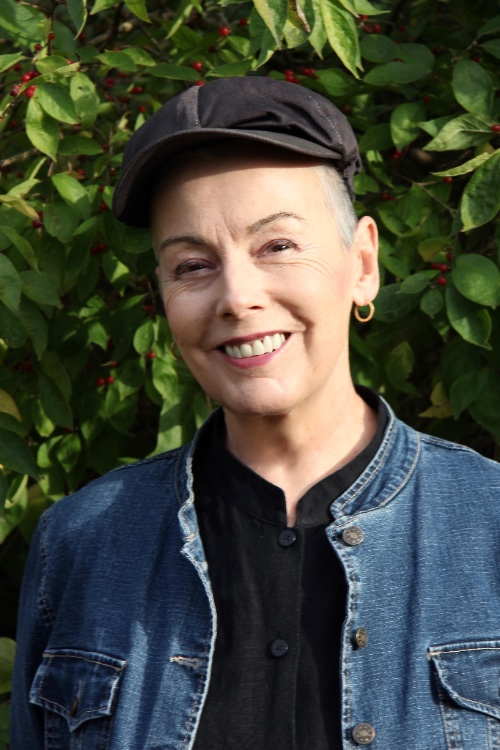
Exploring the Inevitability of Death: Myrna Stone Brings Life to Voices From the Past
|
|
|
Researching
the voices of the past is a major aspect in Myrna Stone’s writing
process. In order to properly place herself within the mindset of her
work, the Greenville, Ohio poet says she likes “to write to a theme.”
The theme for Luz Bones is mortality versus immortality and its focus on the characters throughout the book. Stone is the author of Luz Bones (Etruscan Press, 2017), In the Present Tense: Portraits of My Father (White Violet Press, 2013), The Casanova Chronicles (Etruscan Press, 2010), How Else to Love The World (Browser Books Publishing, 2007), and The Art of Loss (Michigan State University Press, 2001).
“I knew I had my theme: mortality versus immortality. And frankly, it’s
less stressful to measure both when one is working with people and
material from the deeper past than with our own dearly departed in the
near present. Yet, speaking in the voice of someone centuries dead can
also be difficult because it requires, among other things, using a
certain amount of archaic language. To do that successfully was my
largest challenge, particularly in the requisite abbreviated form of a
sonnet,” Stone says.
“My only criteria for choosing people to write about was that they, and
the circumstances of their lives and/or deaths, fascinated me to the
point of obsession. I especially found myself attracted to those who
either perceived themselves as outsiders, or actually were outsiders, no
matter what century or culture they lived in,” says Stone. The topic of
death influences life and how people act upon it when it affects
them.
One of the more interesting parts of writing from the viewpoint of the past is knowing the starting point. Stone begins Luz Bones
in 1536 with Martin Luther speaking to his wife. Stone says, “Martin
Luther and his wife were simply the earliest subjects I came across that
I was interested enough in to write about. And because I wanted each
pair or sequence of poems throughout the book to run chronologically,
his poem of 1536 and his wife’s of 1540, aside from the title poem that
begins the book, had to be first.”
“Death adds an inevitable gravitas to anyone’s story. On a personal
level, when death is factored in, change is factored out. However, on an
impersonal level, history’s assessment can continue to fluctuate over
time. I wanted both levels to have some play in the poems,” says Stone.
When it comes to researching the voices of the past, it is important to
remember all the numerous circumstances surrounding each character.
Stone says, “I did a lot of research. Each poem I wrote was based upon a
verifiable fact or set of circumstances. Beyond that, I simply tried to
place myself emotionally into my speakers’ minds and hearts and then
let that drive their narratives.”
An important aspect in Stone’s writing process is her use of
incorporating sonnets and triolets along with other forms. She makes
sure to have a mixture of all types of forms to give each poem its own
personal style.
“Since sonnets are traditionally poems of love, it seemed logical to use
that form in writing poems between husbands and wives, parents and
children, and intimate friends. But I also varied from that a bit.
Sometimes triolets, with their repetitious lines, seemed better suited
to certain elegiac moments, such as in the Valentich sequence. And,
quite honestly, sometimes I was simply after variety by choosing a form I
hadn’t written in for a while,” says Stone.
Stone’s research went even further than influencing each form for her poems as she focused deeper into her characters.
“When I began my research on each person I wrote about I assumed that
what I'm going to say next was true. The surprise was in how thoroughly
and completely it seems to be true: that is, that all of us, no matter
when we live or when we die, want to love, be loved, and, perhaps most
of all, be remembered,” Stone says.
Doing all this research usually leads to discovering something quite
more than what was originally thought to be found. Discovering new and
unexpected things is a part of Stone’s writing process.
Understanding the voices of the past is the beginning step into
exploring mortality versus immortality. It is also an interesting style
that many people can begin to explore and discover for themselves.
Stone also shared her advice for anyone who is interested in writing and
researching voices from the past. She says, “learn as much as you can
about those you’re researching. Even if you only incorporate a small
amount of that information into your narratives, it will still be
helpful in filling out your understanding of what shaped them as human
beings. Then inhabit them as fully as you can. Sometimes it will seem as if they are beginning to speak through you.
And that’s what you should be after. Finally, make sure that the words
‘they’ use are appropriate to and have the flavor of their period. At
the risk of overstating it, language, in all its slippery, malleable,
condensed specificity to time and place, is poetry’s truest artifice.”
Ashlee Harry is pursuing her B.A. in English: Professional Writing
from Penn State Berks and serves as an intern with Etruscan Press. She
currently resides in Edwardsville, Pennsylvania.
|
|
New Release from Etruscan
|
|
|
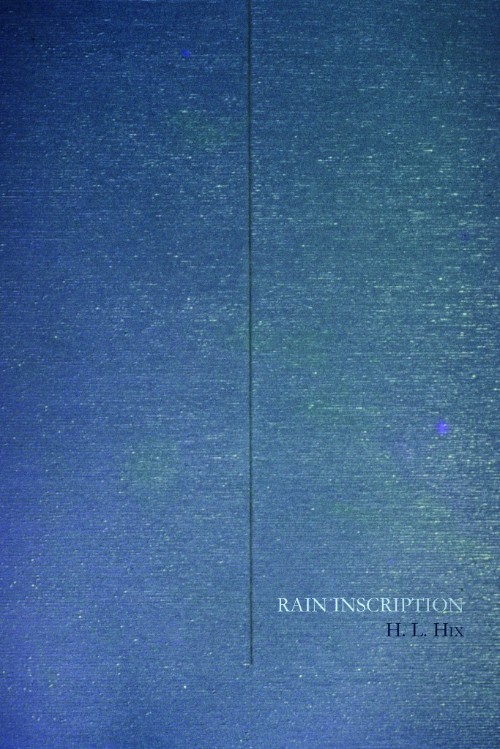
Rain Inscription by H. L. Hix
We’re proud to publish H. L. Hix’s 13th Etruscan publication, Rain Inscription, which gives vivid testimony to the paradox that human making is both lasting and fleeting.
Each of its three sections (a sonnet sequence Q&A with contemporary
cultural studies, a renewal of the sayings of Herakleitos and Jesus, and
a group of dialogues with contemporary artists) extends an already
capacious dialogue beyond its prior limits. Christian Wiman says,
“Harvey Hix is a philosopher with a gift for—which is to say, a gift for
getting lost in—song. That might remind you of Wallace Stevens, just as
Hix’s formal variety and fine madness might recall some combination of
George Herbert and Hart Crane. Finally, though, the strict,
eccentric music that Hix makes is utterly his own.”
|
|
|

|
|
Phil Brady hosted a poetry workshop at the 2016 Pennsylvania Writers Conference at Wilkes University.
|
|
The Pennsylvania Writers Conference (PWC)
was launched in 2004 at Wilkes University. In 2016, PWC was held on
August 5 and 6. The conference united over 200 writers from the literary
community and provided opportunities for engagement, education, and
empowerment. PWC consisted of a poetry slam and open mic hosted by Grand
Slam champion and Wilkes alum Laura Moran, various panels, readings and
workshops, a submission contest, and keynote speaker, Jay Parini.
Etruscan Press provided graduate assistants to help plan, promote, and
deliver PWC.
PWC returns to the Wilkes University campus from July 30-August 5, 2017.
PWC will again unite the literary community in Wilkes-Barre, PA. This
year, PWC is expanding from a two-day conference to a six-day event
including nine pre-conference workshops in thriller, fantasy, creative nonfiction, people and place, memoir, screenwriting, poetry, and two certificate programs, one in arts education, and another in publishing.
Following the pre-conference workshops, PWC will once again host a
two-day conference filled with workshops, craft classes, panels, and
more.
|
|

|
|
Former National Slam Champion and Def Poetry star Jason Carney will host the poetry slam at PWC17.
|
|
Friday night Jason Carney, former
National Slam champion and Def Poetry star, will host an all-conference
poetry slam. On Saturday, he will run a slam workshop.
The conference ends Saturday evening with a reading and book
signing with Pulitzer Prize winning poet and former United States Poet
Laureate Natasha Trethewey.
|
|

|
|
Former United States Poet Laureate Natasha Trethewey will give the keynote address at PWC17.
|
|
|
For more information about the Pennsylvania Writers Conference, please visit: http://www.wilkes.edu/pwc.
|
|
Ronnie Stephens Wins Etruscan Prize
|
|

|
|
Ronnie Stephens, center, was awarded the 2017 Etruscan Prize for his poetry.
|
|
We’re proud to congratulate Ronnie Stephens,
who was awarded the Etruscan Prize for his poem "What I Know Now."
Stephens was awarded the prize at the June 2017 Wilkes Graduate Creative
Writing Program banquet. The 2017 Etruscan Prize was judged by Myrna
Stone, author of Luz Bones (2017) and The Casanova Chronicles (2010).
Stone commented about Stephens's work, saying, “A paean to motherhood,
and, by association, fatherhood, the poem not only uses language that
sings, but also employs a strong and confident voice that propels
the poem, seemingly effortlessly, down the page to its passionate
conclusion. Every move Mr. Stephens has made seems just right, that is,
at once both inevitable and unexpected. This is superior work.”
Stone is the author of five books of poetry, including In the Present Tense: Portraits of My Father, which was a Finalist for the 2014 Ohioana Book Award in Poetry, and The Casanova Chronicles, which was also a Finalist for the 2011 Ohioana Book Award in Poetry. Her poems have been published in Poetry, The Massachusetts Review, The Southwest Review, Boulevard, New Orleans Review, Quarterly West, Nimrod, River Styx,
and in nine anthologies. Stone has received two Ohio Arts Council
Grants, the 2001 Ohio Poet of the Year Award, and is a founding member
of The Greenville Poets. She lives in Greenville, Ohio, with her husband
in an 18th century house they moved from Rhode Island.
Photograph information: Etruscan Press Executive Director Phil Brady,
2017 Etruscan Prize recipient Ronnie Stephens of The Colony, Texas, and
Etruscan Press Executive Editor Robert Mooney at the June 23, 2017
Wilkes Graduate Creative Writing Program ceremony. (Photo credit: Shawn
Hatten)
|
|
About Etruscan Press:
Housed at Wilkes University and partnering with Youngstown State
University, Etruscan is a non-profit literary press working to produce
and promote books that nurture the dialogue among genres, cultures, and
voices.
For the latest Etruscan events, please visit our website.
|
|
|
|
|
|
|
|
|