|
|
|
|
Finding Connections in the Virtual World:
A Conversation with Nin Andrews
by Amanda Rabaduex
|
|
|
A
book is a tangible object which goes out into the world. It sits on
shelves. Hands can open it, turn pages. It might exist for hundreds of
years or more. It may be reprinted, excerpts anthologized. If the
electric grid crashes, it will still exist. This much cannot be said for
the online world. This abstract space we cannot hold can momentarily
slip from our metaphoric grasp by everyday occurrences like storms or
solar flares, God forbid an asteroid strike—we would lose it all. What
good is this space for humanity? What role is the virtual world playing
in human connections? These are big questions that social scientists
will no doubt be studying for quite some time and which are beyond the
scope of this writer. What is within my realm to ponder, however, is
what good is social media for the literary world? It turns out, I have
not been the only person thinking about this…I discovered that Etruscan
Press author— Nin Andrews has been wondering the same thing.
Nin was a special guest of a recent Etruscan Press production meeting,
where she came to discuss social media. The timing was serendipitous, as
Etruscan has recently launched a social media initiative to create more
engagement with the literary community. For Nin, social media brings to
mind lines from "Poetry," a poem written by Marianne Moore:
I too, dislike it: there are things that are important beyond all this fiddle.
Reading it, however, with a perfect contempt for it, one discovers that
there is in
it after all, a place for the genuine. (1-4)
“In the online world, is there,” Nin asked, “a place for the genuine?”
In discussing the ‘social’ in social media, Nin said, “I prefer my flesh
and blood friends to their digital selves. I prefer bookshops and
libraries and readings to online book purchasing. And worse, I don’t
like self-promotional posts. I’ve been resistant to social media for
years now.”
I understand how Nin feels. Social media comes with some negative
aspects. The seemingly infinite number of daily posts can make the space
feel, at times, like a shouting match where the voices of negative or
attention seeking people are magnified. Some feel the need to “brand”
themselves – to present an image to the public. This branding is what
helps propel some people to a level of online followers which garners
them the moniker “influencer,” allowing them to profit from their social
media interactions. In the recent Publisher's Weekly essay, “A
Writer Says Goodbye to the Twittersphere,” writer Julie Poole recounts
attending panels in which literary agents said, “a strong social media
presence is something they look for in a client,” yet Poole was on
social media for one day before quitting. Poole states, “It just didn't
feel right...I chafed at the idea of building a ‘me’ brand.” Perhaps
turning virtual interactions into a type of monetary transaction is what
keeps writers like Poole along with many others apprehensive about
social media?
Poole points out that the online world is “saturated with writers who
want to reach readers,” but from speaking with Nin, I learned that there
are many writers seeking not to market themselves, but rather, seeking
connection. Nin described what she does like about connecting
virtually: She likes poems in her email daily. Nin likes virtual
lectures on craft and literature, virtual readings, and podcasts about
literature. She likes reading poems on social media when she feels they
are not being used as a form of self-promotion. Nin's list had me
nodding my head in agreement. I started using Twitter 10 months into the
pandemic for similar goals. Twitter seems to be a gathering place for
the writing community (and it only makes sense, since it is the platform
which consists, primarily, of words.) For me, Twitter opened a new
world. I have been able to interact with some of my favorite poets
despite living miles apart. I've learned about calls for submissions
from literary journals. I've read new poetry and discovered new poets
that I've grown to love. I've been able to share ideas, words, and
images which speak to me. Twitter became a place to find virtual
connections when our world was in the midst of in-person distancing.
Writer Gila Lyons considers social media platforms to be the most recent
in a line of communicative evolution that has made its way from the
printing press to the typewriter to the personal computer. In her essay,
“Telling #Stories” featured in Poets & Writers, she says,
"The medium evolves. Styles change. But the impetus behind writing,
behind literature, stays the same. Day after day, as people log on to
their social media accounts composing little treatises as tweets and
captions and status updates, they are trying to explain, as every writer
is at their core: This is who I am; this is what I've seen; this is
what I think and feel; this is what has made me me."
It seems that when we approach the online world as a place for
connection rather than for marketing, we find benefits. Nin saw this in
action when, due to the pandemic, she was part of a virtual reading
event where the host asked the featured poets to not only read, but also
to have conversations about what they were reading. “After the event,”
she says, “I got more emails talking to me from friends about how great
it was to hear us talk and then read and talk and then read. They felt
like they knew us, like they understood poetry better. They felt like,
my friend...who is a yoga teacher...said, ‘At last I understand what
you've been doing all these years and I'm kind of jealous. I want to do
it to,’ like she felt very engaged.” Reflecting on what this experience
tells us about connecting virtually, Nin relates, “Online accessibility
is huge for audience members ... There's something happening that people
are totally enamored of.”
As an audience, being able to interact with a writer makes us feel
invested. When poets I admire “like” something I share online or
comment, I feel more connected to them and subsequently their work. When
Nin's audience listened to her not only read her poems, but speak about
her experience writing poems, the virtual connection became a bridge
between Nin and her listeners.
The ability to forge connections in the writing community is the reason
that Etruscan Press has recently started a new social media initiative.
The best thing about Etruscan Press is the incredible authors we work
with, so I love seeing the way Etruscan can use social media to connect
readers with information about these authors, including their newest
publications and successes. Etruscan Press also has an established
Outreach Program with free features such as videos on craft and
literature, interviews with writers, and study guides for each of our
publications. Social media provides the ability to make these resources
known to a wider audience. We aren't stopping there, though. Speaking
with Nin led to many other initiatives which we are working on behind
the scenes. This might be why Etruscan Press Managing Editor Bill
Schneider says, “Nin Andrews has continued to be this angel that appears
whenever we need a push, a flutter of a wing.”
As Etruscan Press moves to use social media as part of our mission to
“nurture a colloquy of voices: writers and readers engaged in enlivening
the discourse between individuals and across communities,” we invite
you to connect with us in-person, and – as long as the electrical grid
holds up – in that abstract space that has let us stay connected despite
the distance. That space that we love, and sometimes love to hate. You
can find more about the Etruscan Press Outreach Program here. You can find us on social media through Facebook, Twitter, and Instagram.
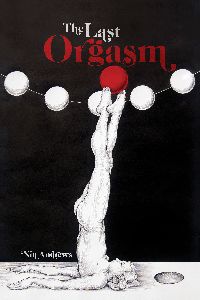
Nin Andrews' poems have appeared in many literary journals and anthologies including Ploughshares, Agni, The Paris Review, and four editions of Best American Poetry. The author of six chapbooks and seven full-length poetry collections, including The Last Orgasm (Etruscan
Press, 2020), she has won two Ohio individual artist grants, the Pearl
Chapbook Contest, the Kent State University chapbook contest, the Gerald
Cable Poetry Award, and the Ohioana Prize for Poetry. She is also the
editor of a book of translations of the Belgian poet, Henri Michaux, Someone Wants to Steal My Name. She lives on a farm in Charlottesville, Virginia with her husband, cows, coyotes, and many bears.
|
|
|
Amanda
Rabaduex is a poet, writer, educator, and Air Force veteran. She is a
graduate assistant at Etruscan Press, and she is pursuing an M.F.A. at
with the Maslow Family Graduate Program in Creative Writing at Wilkes
University. You can connect with her on Twitter.
|
|
New Releases from Etruscan
|
|

|
We are pleased to welcome Stephen Benz’s Reading the Signs: And Other Itinerant Essays to the Etruscan Press family.
What happens when a wandering spirit and an inquisitive mind explores landscapes of personal and cultural significance? Reading the Signs
identifies a recurrent motif: in many of the essays, the narrator stops
to read signs, especially historical markers, that prompt reflection
and provide guidance to the direction that the essays take. From
rock concerts and courthouses to farm towns, battlegrounds, historical
sites, and quirky museums, Benz ventures across country and overseas in
search of forgotten, overlooked, or misunderstood stories.
Benz is the author of three books of travel essays—Guatemalan Journey (University of Texas Press), Green Dreams: Travels in Central America (Lonely Planet), and Topographies (Etruscan Press, 2019), a finalist for both the Housatonic Book Award for Nonfiction and the Foreword Review Book of the Year. He has published essays in Creative Nonfiction, River Teeth, TriQuarterly, New England Review, and other journals. Benz teaches professional writing at the University of New Mexico.
|
|
|
Voice Lessons
by Cynthia Kolanowski
|
|
True confession: I love proofreading. Not my
own work—that brings misery and angst—but proofreading (and editing)
others’ work. It’s a practice that takes me out of the noise of my day
and insists that I notice only what’s before me. So when Etruscan Press
Managing Editor Bill Schneider invited the interns to review the 2022
Etruscan catalog, and Etruscan Executive Editor Phil Brady followed up
with an invitation to the interns to review his introductory letter for
the catalog, I thought, Absolutely. The reading I have to do for my critical essay—literary criticism about literary criticism—can wait.
When completing the catalog review, I dropped into proofreading mode: a
read-through to familiarize myself with the document, and then a look at
each element of the catalog. As I reviewed the catalog, I thought about
the number of people who have worked on the document, not just the
interns from last semester, but staff and interns from years ago: the
ones who designed the layout, created the backlist, wrote prior versions
of the call for interns and the community-outreach page—generations of
voices in one document—and now this generation, adding and subtracting,
telling new stories. By proofreading I was, in a sense, learning the
language of Etruscan.
The second session—reviewing Phil’s introductory letter—was a little different. Phil’s charge to the interns—Have at it—left things more open, hinting that along with the standard corrections protocol—
Page Para Line
Original text
Should be…
—there was editing involved. For this review, I had to pay attention to
what the writer was doing and how: to look more closely at style as a
way to understand the editor’s sensibilities. The patterns in comma use
and capitalization, variations in sentence length and structure, and the
use of an extended metaphor are choices that ultimately represent
Etruscan’s ethos. I had to ask, What am I noticing? Where are the
places to make the implicit (Etruscan’s mission) explicit and how,
following the style of the letter?
The literary agent Albert LaFarge
suggests to writers that to distinguish themselves they should treat
their synopses, pitches, and query letters as part of a literary genre
and to embrace the belletristic nature of that genre. I think the same
holds true for publishers: everything—catalog layout and copy, website
design and content, social-media posts—should reflect the editorial
sensibilities of the press. Treating these publications as
belles-lettres moves beyond “branding” (a term that seems to be the
recommended panacea for organizational woes) and keeps writing at the
center. How—and how well—does the writing and design reflect the
publisher’s mission? And, of course, how, with the number of people
involved in these publications, do publishers create a unified voice yet
leave room for serendipity? I love the scene in The French Dispatch
when Bill Murray’s character, Arthur Howitzer Jr., says to his writers,
“Try to make it sound like you wrote it that way on purpose.”
As an intern, proofreading and editing are opportunities to take voice
lessons: to observe, practice the art of imitation, and, whether by
design or chance, contribute a line or two to an ongoing conversation
about how and why literature matters.
Cynthia Kolanowski is pursuing an M.A. in Publishing at Wilkes University.
|
|
About Etruscan Press:
Housed at Wilkes University and partnering with Youngstown State
University, Etruscan is a non-profit literary press working to produce
and promote books that nurture the dialogue among genres, cultures, and
voices.
For the latest Etruscan events, please visit our website.
|
|
|
|
|
|
|
|
|