|
|
|
|
She Lost A Jungle; Now She’s Saving the Planet:
An Interview with Sari Fordham
by Michael Hardin
|
|
|
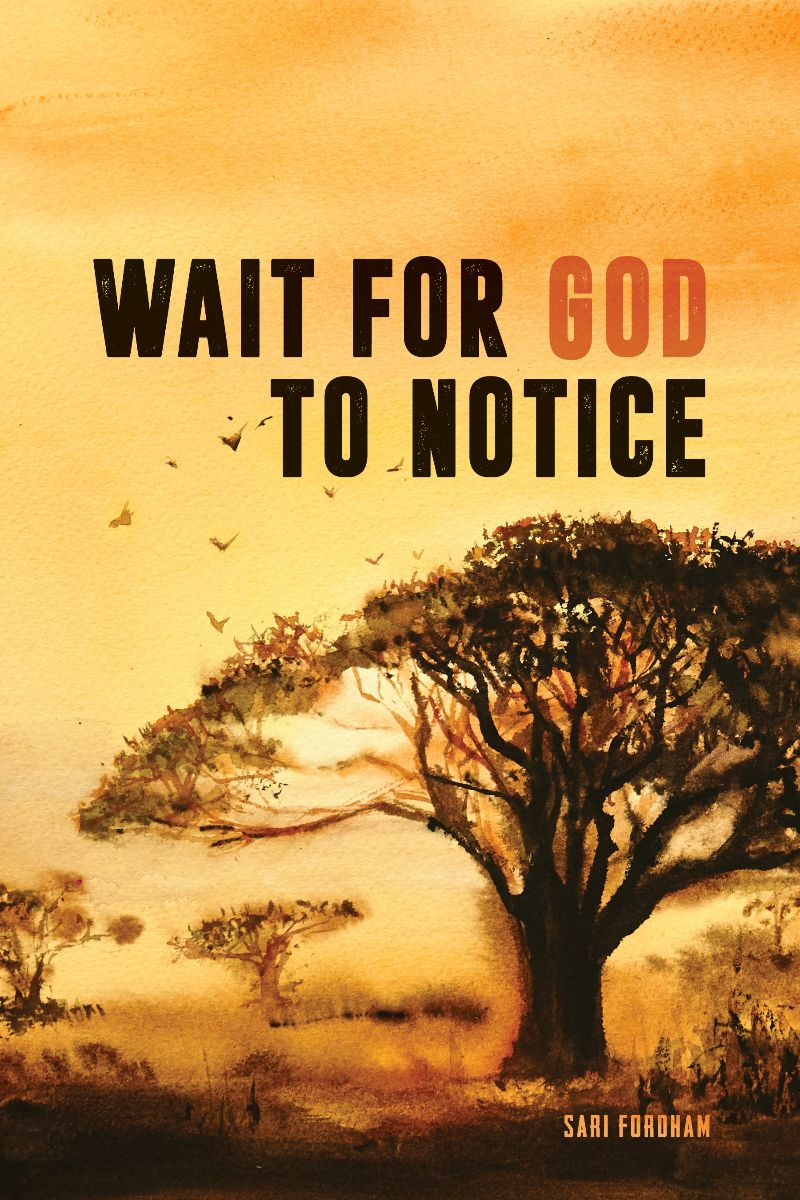
Sari Fordham is the author of the forthcoming memoir, Wait for God to Notice,
from Etruscan Press. She has lived in Uganda, Kenya, Thailand, South
Korea, and Austria. She received an MFA from the University of
Minnesota, and now teaches at La Sierra University. She lives in
California with her husband and daughter. Sari also writes a newsletter,
Cool It, which addresses the climate change crisis.
How does your newsletter allow you to address similar themes that you introduce in Wait for God to Notice?
In Wait for God to Notice, I write about growing up in Uganda
in a house surrounded by jungle. Vervet monkeys harvested our tomatoes,
mambas hung from branches, driver ants streamed through the yard and
even into the house. We saw bush babies, genet cats, mongoose, and lots
of bats. The jungle felt immense when I was a child, though I later
realized that it was a miracle, a small habitat next to a college
campus, and then on my last visit back to Uganda, it was gone. I hardly
knew where I was without the trees. I could have wept, though I also
understood the practicality of it. I can’t stress enough how many snakes
lived in that jungle. The loss of the forest that surrounded our
Ugandan house is a small piece of a much larger narrative. Since I lived
in Uganda as a child, over 60 percent of the country’s forests have
been cut down. Today, young Ugandans are on Twitter asking the world to
respond to climate change—which is hitting Uganda particularly hard—and
to speak out about deforestation. That’s one part of the story.
The other part of the story is that my memoir is coming out in May.
Conventional wisdom says writers need a newsletter. But I was certain
that I didn’t want one. In fact, I began a conversation with my husband
Bryan about how I absolutely, positively was not going to start
a newsletter, and somehow I ended the conversation excited about the
newsletter I was about to start. All Bryan had done was listen deeply as
I made a connection between my childhood and my environmental activism
and how a newsletter could fit between those two spaces.
Does the newsletter allow you greater freedom to confront climate change without the veneer of literature?
I really think it does. I’m trying to write the newsletter I would want
to read. Reports from climate scientists paint an increasingly
apocalyptic future. It’s hard to hear as a parent, especially since
climate change isn’t an abstraction; it’s something we’re already
experiencing in California. The future—my daughter’s future—looks
potentially very bleak. As a mom, I need some actionable steps,
otherwise I’m going to start turning off the radio when NPR reports on
the environment. The title of the newsletter—Cool It: Simple Steps to Save the Planet—is
a little tongue in cheek. Obviously, there is nothing simple about
responding to the complexity of climate change. But the title is also a
little sincere. Sometimes we decide a problem is so big that it’s
unsolvable and therefore we must accept the status quo. I think we’re
already seeing a bit of that defeatism and it serves corporations and
others who exploit the natural world. And so, I wanted to focus on what
regular folks can do. It turns out, we can do quite a lot.
The newsletter format allows me to provide those actionable steps to
readers, whom I assume are both busy and concerned. Each month, I focus
on one change readers can make in their personal lives (compost, plant
clover, stop online shopping for a month) and one action to disrupt the
systems (let corporations know you’re paying attention, contact your
city council person). With a newsletter, I can use hyperlinks to make it
easy for readers to answer calls for action.
How does the newsletter introduce readers to Wait for God to Notice?
I would love readers of the newsletter to become readers of my memoir. I
currently have information at the bottom of my newsletter about Wait for God to Notice
and how my childhood connects to my environmentalism. I don’t address
my book in the body of the newsletter because I’m very focused on
environmental actions. Perhaps when my book comes out in May, I’ll have a
brief note, but I’m still figuring things out.
Starting a newsletter has been rewarding because I get to think about
climate change from a place of response. In my ideal world, my
newsletter readers will start composting or maybe add clover seed to
their yard. Maybe they’ll attend a city council meeting or switch to a
more sustainable toilet paper brand. No reader is going to make every
change. My hope, instead, is that every reader will feel more
optimistic, more knowledgeable, more empowered.
Michael Hardin is an M.A. candidate in Creative Nonfiction in the
Maslow Graduate Creative Writing Program at Wilkes University. He
is currently working on a memoir, Touched.
|
|
New Releases from Etruscan
|
|
We are pleased to welcome Sari Fordham’s Wait for God to Notice to the Etruscan Press family.
What is it like to grow up in a Seventh-day Adventist missionary family
in Idi Amin’s Uganda? Driver ants and mambas, shaking hands with
the dictator. In her memoir Wait for God to Notice, Fordham
describes in lush and observant prose the country she loves, the
dangers her family faces, her parents’ conflict, and the insular,
peculiar faith that shaped her. Through her work, Fordham reckons
with her mother’s death and discovers a legacy of courage and
capability.
Fordham teaches creative writing at La Sierra University in Riverside, California.
|
|
|
AWP Small Press Award Nomination
|
|
Etruscan Press was named one of four
finalists for the 2021 AWP Small Press Publisher Award by the
Association of Writers and Writing Programs. The award recognizes a
press or literary journal that has made a significant contribution to
contemporary literature. This is Etruscan’s second nomination; the press
was previously nominated for the Small Press Award in 2017.
The Etruscan editorial team were in their own corners of the world when
the news came in, working from home as is typical in these times. Yet,
while separated by space, they were united in the singular joy of being
recognized for, as Executive Director Phil Brady put it, “The work you
hold in loving custody.”
“In the sludge of daily emails—buy, sell, compare, submit—it appears: a
message that doesn’t query or remind or coax or palaver,” Brady said.
“An act of acceptance. Of gratitude. A thrill. ‘I’m delighted to
inform…’ “Warm Congratulations….’ ‘It is with great pleasure…’ This
one—the Small Press Award Nomination (our second time!) is especially
rewarding because it links us to presses I admire—Noemi and Dzanc and of
course the winner, Milkweed. In the small press world, Milkweed is
venerable. They’ve been around since the seventies; they are in their
second generation—a place Etruscan aspires to, one day. And so I
daydream that one day in 2040, an e-mail will arrive
at Etruscanpress.org. ‘I’m delighted to inform’ it will begin.”
Pamela Turchin, Etruscan’s Production Editor, noted the same sentiment
of the forgettable mundane broken with momentous news of the award.
“When I heard we had been nominated, I was probably either shoveling
snow from the various blizzards we've had here in Pennsylvania or
dealing with a broken water pump that flooded my basement,” Turchin
said. “I felt honored to be a part of this process and thrilled that
our team effort was recognized for all the work we do every day.”
Executive Editor Robert Mooney remarked, “I’d been writing (what else
would an old scribe be doing on a snowy Wednesday afternoon?) and was
taking a break, looking up out of the foxhole to see what was going on
beyond my desk.” The view beyond his foxhole was bright: “It was
wonderful news to receive. It felt like applause. In fact, it felt
like a curtain call. This is the second time we’ve been named a
finalist for this recognition, so there is no doubt AWP truly
does recognize Etruscan as a press that has, as the citation reads,
‘made a significant contribution to contemporary literature.’”
For Managing Editor Bill Schneider, the announcement came amidst another
sort of triumph. Proving all the possibilities that come from the
strength of human will and spirit, Schneider was recovering from his
COVID-19 vaccination. Feeling lethargic and sore, he finished up a Zoom
meeting. “Then I walked my puppy, Max, through the snow-covered park
adjacent to my apartment,” Schneider said. “We returned home to find the
email confirming Etruscan was named a finalist for the 2021 AWP Small
Press Award. I immediately forwarded the email to the Etruscan editorial
team. Then, Max and I celebrated with a martini for me, and a Kong
filled with treats for him. It is beyond wonderful to be recognized by
your peers! In an industry where Etruscan has achieved its mission to
nurture the dialogue among genres, cultures, and voices, it is an honor
to be named a Small Press Award finalist by AWP.”
Mary Poth earned a B.A. in Professional Writing from Kutztown
University and an M.A. in Fiction from the Maslow Graduate Creative
Writing Program at Wilkes University. Poth is currently pursuing
her M.F.A. in Creative Writing at Wilkes University where she
serves as an intern for Etruscan Press.
|
|
About Etruscan Press:
Housed at Wilkes University and partnering with Youngstown State
University, Etruscan is a non-profit literary press working to produce
and promote books that nurture the dialogue among genres, cultures, and
voices.
For the latest Etruscan events, please visit our website.
|
|
|
|
|
|
|
|
|