|
|
|
|
A Second Home At Etruscan
|
|
|
by Luciana C. Musto, Wilkes University M.A. ’10
As someone with decades already spent in the workforce, the idea of an
internship with Etruscan Press seemed overwhelming and daunting. I
reflected on my last experience as an intern when I was fresh-faced and
enrolled in college with barely any responsibility. Having a full-time
job, a family, and multiple commitments filled me with anxiety every
time I thought about this new obligation.
Luckily for me, I was not alone. The Spring has brought not only myself,
but five other Wilkes University Creative Writing graduate students in
the final semester of their M.F.A. studies to the Etruscan Press
machine. Under the leadership of Executive Director Phil Brady and
Managing Editor Bill Schneider, we have been a powerhouse team.
Our backgrounds are varied. Broadcast journalism, fundraising, law,
print journalism, entrepreneurship, and teaching are the surface areas
of expertise. The ages range just as far—but I will spare my fellow
interns. Basically, we are as different as can be, but under the
Etruscan umbrella, we share a common goal.
Interning with Etruscan Press has allowed me to understand the depth and
breadth of what a publisher accomplishes. In my naivety, I believed
publishing was a fairly simple process. A manuscript is received,
reviewed, edited, and printed. Done! Not so. A manuscript, once accepted
for publication, is cared for lovingly. There is an immense amount of
attention placed on every aspect of the manuscript in ways I could have
never understood before my experience.
As interns, we have worked on every part of the process. I have been
lucky enough to take part in the weekly production meetings, where I
have enjoyed seeing the dynamic between Bill and Production Editor
Pamela Turchin. Their organizational skills and regimented process help
to ensure that everything stays on schedule—and most times ahead of
schedule.
I have also been working on the Etruscan publications, letters to
authors, and research projects that ensure we’re on the good side of
copyright law. Being part of the editorial process has taught me the
importance of looking at an issue from all angles to make sure every
point of view is considered.
Meg Hall and Sally Lehman have both worked on study guides, which are
packaged with each book to help educators plan lessons around themes,
structure, and content. These pieces challenged both Sally and Meg, as
they quickly pointed out. I reviewed final copies for small errors, and I
was impressed by the thoughtfulness and creativity employed by the
study guide authors to dig deeply into the text.
Sally also served as a point person for this year’s AWP conference,
which was held in Portland, Oregon, close to Sally’s home. Her
willingness to be delivery woman and organizer really helped to expedite
the usual difficult and costly process for Etruscan Press.
Julie Yelen was integral in assisting Etruscan Press in making contacts
with news media in the Norfolk, Virginia area to promote Laurie Jean
Cannady’s memoir Crave: Sojourn of a Hungry Soul. Julie is putting the finishing touches on an audiobook version of Lynn Lurie's Museum of Stones.
She has also been impressed by the process, saying, “Such great care is
taken to make sure amazing stories are brought to life.”
Samantha Stanich has been able to utilize her Youngstown, Ohio roots to
assist with outreach for Etruscan Press this semester. Samantha is also
currently working with Dr. Brady’s inmate education program, which she
has thoroughly enjoyed. This has been a semester of renewal for Samantha
as she has been able to marry her love of her hometown with her work
for her M.F.A., even making a trip home as part of her outreach
responsibilities. Samantha mentioned that she “never felt like I was
searching for information because it was always available to me.”
During our last residency where we had to choose our area of interest,
Rodney Annis had expressed a desire to learn more about grant writing
and the process of raising funds for a nonprofit press, which Etruscan
Press happens to be. Rod has been working with author Sheryl St. Germain
to promote her memoir-in-essays, 50 Miles, an exploration of
her son’s death from addiction and her subsequent search for peace. The
hope is that those who have experienced this particular heartbreak can
find solace in her words and learn from her journey to understanding.
We have accomplished a lot, but there are so many things I didn’t touch
upon. I have been amazed by not only the amount, but the quality of work
that the Etruscan team pulls off with such a small (but mighty) staff.
There is an immense love for literature, and an overwhelming belief in
the power of the written word and its ability to positively affect the
world.
Through Wilkes, we have been able to not only reach our educational
goals, but our personal goals as well. I never thought I would be able
to pen a novel. I never thought I’d be able to work for a literary
press. Meg mentioned that it helped her reveal “a self I did not expect
to find.” We would all agree with her!
To have access to such talented, passionate writers and have them as
mentors is a dream. The sense of community is without compare. Some of
my best friends are classmates from the Maslow Family Program in
Creative Writing. There is no hierarchy or ego. At the risk of sounding
cliché, it’s truly a family. The energy is positive and supportive. The
residency is as close to the loving safety of a mother’s womb as we can
ever feel. It may sound ridiculous, but believe me, there is truly
nothing like having the freedom and support to explore your ideas in
such a nonjudgmental environment.
As for me, I have been struck by lightning twice. I earned my Master’s
degree in 2010, and here I am, almost a decade later, on the cusp of
receiving my M.F.A. For me, this degree is icing on the cake. What I
have gained in experience and fellowship cannot be quantified. I can
forever turn to my friends, my classmates, my mentors, my fellow
Colonels, and always have a community where I can continue to grow,
learn, write, and flourish.
Luciana C. Musto M.A. ’10 works in the Advancement Division at
Wilkes University. She lives in Pittston with her husband, Leon S. John,
Jr., Ph.D., their son Kian, and their two dogs, LT and Libby.
|
|
New Releases from Etruscan
|
|

|
We are proud to welcome Lynn Lurie’s Museum of Stones to the Etruscan Press family.
Museum of Stones links a mother’s past and present in a dizzying narrative as she raises an unusual son.
The unnamed narrator in Museum of Stones carries the name of
every mother who has stared into the face of her newborn, having no idea
of what is about to unfold. Everything in the narrator’s life is
refracted against this singular event, often giving way to memories at a
dizzying speed. The interconnections of time, place and emotion flood
her thoughts as she moves through her daily routines. All of it relates
back to the moment of him. An elegy for a life lived, Museum of Stones
is also an elegy for the lives she will not live, because, now, after
his birth, everything reflects and reverberates against the sound and
content of her son’s voice. She works, sometimes struggling heroically,
to connect the pieces of herself, to form a complete whole. And when her
collage is done there is the hope there are no fault lines threatening.
|
|
|
Etruscan Press at AWP 2019
in Portland, Oregon
|
|
by Judy Jones, Etruscan Press Graduate Assistant
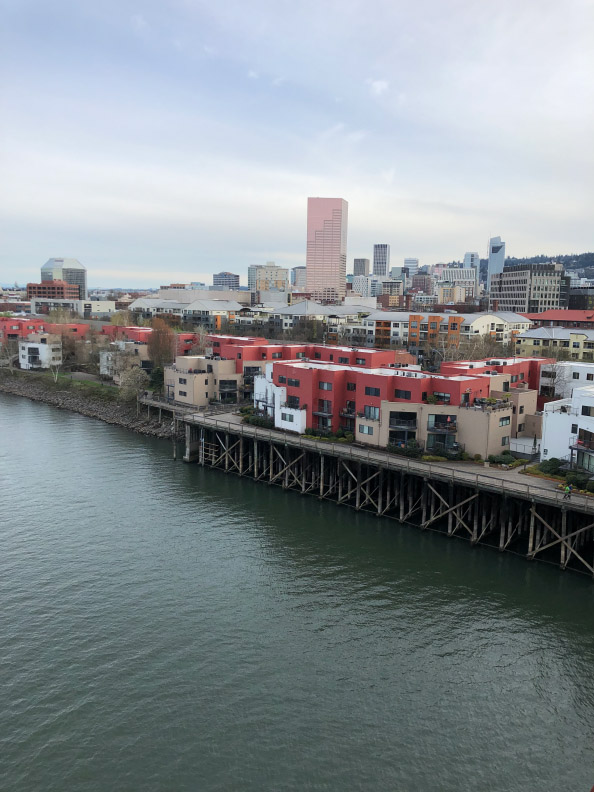
Etruscan authors and staff arrived in Portland, Oregon for the 52nd
Anniversary Celebration of the Association of Writers and Writing
Programs Conference and Bookfair. AWP 2019 was held from March 27-31,
2019 at the Portland Convention Center and the DoubleTree by Hilton
Hotel Portland. The conference kicked off with a Gala to benefit the AWP
Mentorship Program. The glamorous glamping evening, entitled “Braver
Together” featured a conversation with Cheryl Strayed, author of Wild.
Etruscan authors participated in panels, readings, and book signings. In
conjunction with our partner, Wilkes University, Etruscan hosted a
booth on the Bookfair floor, offering book signings by Laurie Jean
Cannady, Robert Eastwood, Patricia Horvath and Daneen Wardrop.
Other Etruscan authors served on panels highlighting cutting-edge issues of craft and content. Kazim Ali (The Disappearance of Seth)
hosted a panel discussing the tradition of innovation in poetry. He
focused on the ancient Greek poet Sappho and the role of fragments in
poetry. Additionally, he discussed fifty years of FIELD, the contemporary poetry journal for which he serves as associate editor. In a heart-wrenching panel, Laurie Jean Cannady (Crave: Sojourn of a Hungry Soul) dealt with the difficult topics of childhood sexual violence and the MeToo movement. Patti Horvath (All the Difference) considered the pitfalls of fictionalizing memories in non-fiction and David Lazar (Who’s Afraid of Helen of Troy: An Essay on Love), examined the use of classic essays to enhance the writing of contemporary essayists.
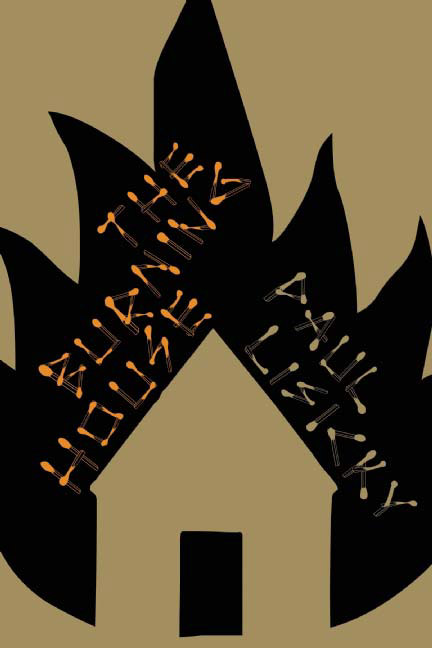
Paul Lisicky (The Burning House) revealed his obsession with
death in his engaging panels entitled “Endings for the End Time?” and
“Am I really going to do this until I die?”
J. D. Schraffenberger (St. Joe’s Passion) was busy with two
panels related to service-learning and creative writing as well as
inclusion and diversity in literary journals. Tim Seibles took on the
challenge of writing love poems in difficult times in addition to a
reading from an eco-justice poetry anthology. Shara McCallum (Poems and their Making) hosted the Boulevard 35th Anniversary and 100 Issues Reading.
Etruscan also co-sponsored the AWP Old School Slam and Open Mic, held on
both Thursday and Friday evenings, attracting over 25 poets who
presented their work.
The Etruscan staff is already looking forward to the 53rd anniversary of AWP, which will be held in San Antonio, TX from March 4-7, 2020.
Judy Jones is pursuing her M.A. in fiction from the Maslow Family
Graduate Program in Creative Writing at Wilkes University where she
serves as a graduate assistant at Etruscan Press.
|
|
by Sue Minsavage (Wilkes University M.A. Student)
One of the many questions a writer must answer when crafting a piece is,
“How does this thing end?” Marketing pressures may push the writer
toward an overly tidy or rosy conclusion, even while world affairs or
personal psychic pain pull the writer toward bleakness. Neither extreme
may capture the tone one has painstakingly created in the lead up to the
work’s ending passages. How, then, can the writer “craft final notes
that imply light and dark, open and closed, emotional and intellectual
complexity?”
The panel discussion (Endings for End Times?) at the 2019 AWP Conference in Portland, Oregon, attempted to address these issues. Etruscan Press author Paul Lisicky (The Burning House,
2011) joined Deborah A. Lott, Jean Guerrero, and Chelsey Clammer in an
exploration of “strategies for endings that feel satisfying for readers,
and yet true to the work, the moment, ourselves.”
The session began with an overview of the topic’s artistic challenges:
Where on the spectrum between All is Well and Everybody Dies should an
ending lie? Can a conclusion be both devastating and hopeful? Should it
be? How much ambiguity can an ending carry, and is a grand statement
necessary at the close of every work? Not surprisingly, these questions
were met with the answer, “it depends.”
To demonstrate varied approaches, Lisicky led the room in a practical
examination of writing samples. This interactive exercise allowed
audience members and panelists to engage in meaningful dialogue about
their own work, as well as that of authors such as T Kira Madden, Myriam
Gurba, Porochista Khakpour, and Esmé Weijun Wang.
Lisicky, currently an Associate Professor in the M.F.A. program at
Rutgers University-Camden, ably steered the conversation toward specific
craft choices, illustrating how the mechanics of the writing (e.g., the
use of white space, varied sentence length, fluidity of narrative time,
list-making, etc.) elicited nuanced emotional responses from the
reader. The result: Writing that successfully balanced the “light and
dark,” satisfying and rich.
The same could be said of the session, whose panelists brought both
humor and in-the-writing-trenches understanding to bear on difficult
authorial questions. Attendees left the discussion with pragmatic
approaches to “begin the end” in their own pieces, aware of the struggle
ahead but optimistic, nonetheless.
Sue Minsavage is pursuing her M.A. in creative non-fiction from the
Maslow Family Graduate Program in Creative Writing at Wilkes University.
|
|
About Etruscan Press:
Housed at Wilkes University and partnering with Youngstown State
University, Etruscan is a non-profit literary press working to produce
and promote books that nurture the dialogue among genres, cultures, and
voices.
For the latest Etruscan events, please visit our website.
|
|
|
|
|
|
|
|
|