|
|
|
|
Revelation in Translation
by Wayne Benson
|
|
|
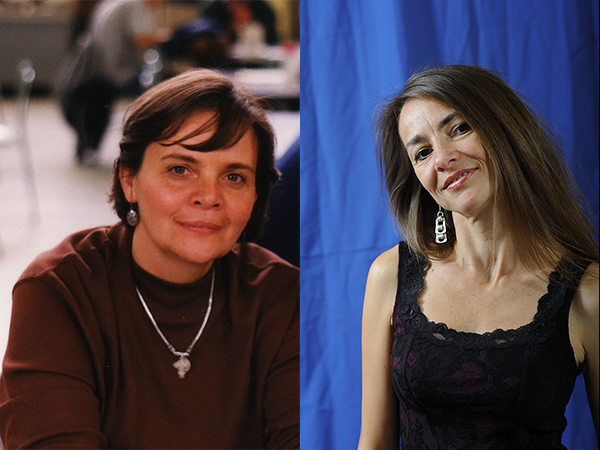
In Clay and Star,
Mihaela Moscaliuc and Liliana Ursu, both natives of Romania,
collaborate to create a new English version of a selection of Ursu’s
poems that spans two decades and thirteen collections.
When asked about the universal nature of her poems, Ursu describes it
“as a gift from God … [where] language barriers can be overcome since
there are no soul barriers in good poetry.” She also refers to a good
translator as the “dream catcher for the poems (s)he translates,” and
Moscaliuc definitely catches the dreams of the poems in Clay and Star.
When asked about the inception of this project, translator Moscaliuc
explains: “I had read some poems by Ursu before emigrating to the United
States, when Romania was still under a totalitarian communist regime,
and although I was not writing or translating poetry at the time,
something stayed with me—enough so that, years later, when I decided to
translate, I knew right away I wanted to bring Ursu’s work into English.
When I read her work in Romanian, I am transplanted into a world that
comforts and heals and illuminates in ways that daily life fails to.
Ursu’s poems supply some much necessary spiritual sustenance. I wanted
to recreate some of that in English, for myself and for others.”
This is not Moscaliuc’s first dive into translating poetry. She has been
involved in translating other works, including a book she published in
2014, The Hiss of the Viper, in which she translated the work
of contemporary Romanian poet Carmelia Leonte into English. Asked if
there were any differences between translating other works and Ursu’s,
Moscaliuc says the process is pretty similar, and that some of the
earlier translations in Clay and Star date back to when she was working on translations for The Hiss of the Viper.
Although the translation process for both collections was similar,
Moscaliuc still remained worried about “carrying over the music and the
spirit that the poems in Clay and Star channeled.” Moscaliuc
had the privilege of working hand in hand with Ursu who “being fluent in
English, and well acquainted with American poetry and aesthetics,” was
able to give the necessary feedback to see this project through to
fruition.
Translating the poems for Clay and Star, Moscaliuc sought
balance. “I tried to adhere to keeping the diction and syntax distilled,
anchored, unadorned, and to honor Ursu’s economy of language and almost
celestial music,” says Moscaliuc. “When something did not feel right,
even after much tinkering, I put the translation aside for months, so I
could return to it with editorial eyes. Ultimately, some of the
translations did not make it into the manuscript. Poems can thrive in
their mother tongue and wither when forced into another’s tongue.”
The poems in Clay and Star do not wither. Ursu quotes Alexander
Pushkin who said “reading poems in translation is like smelling flowers
through a blanket,” adding, “if the translator is a poet himself he can
turn that blanket into a silk veil and this is what Mihaela has done
for my poems in Clay and Star.”
Ursu says that something she wants readers to gain from reading this
collection is to “enter the realm of joy and innocence, to become closer
to God, to rediscover beauty and their soul, thus training for [a state
of] serenity. To feel sheltered and loved and be able to feel the magic
magnetism of poetry.” Moscaliuc also says that “Ursu’s poems have also
given me access to a spiritual world I need, but do not actively seek—or
not as actively as I should.” It is evident that both of these amazing
poets have joined forces and crafted something truly special that
refuses to be held behind a barrier of language.
Wayne Benson is pursuing his M.A in Creative Writing at Wilkes University with a concentration in
poetry. He is from Easton, PA, but now spends the majority of his time
in Quakertown seeking out cool coffee shops to write in.
|
|
New Releases from Etruscan
|
|
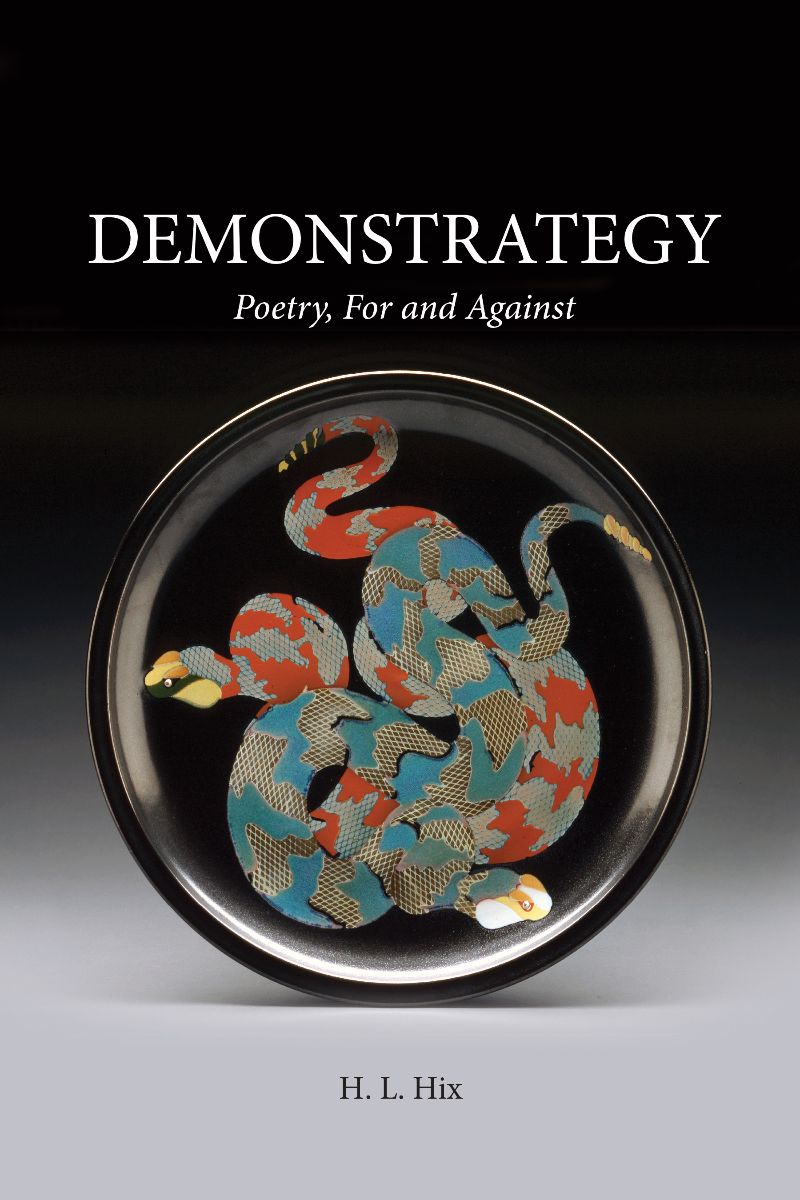
We are thrilled to publish H. L. Hix’s fourteenth Etruscan title, the essay collection Demonstrategy: Poetry, For and Against.
Against the busy background of the “information age” and the
“anthropocene,” where’s poetry? It might seem invisible, irrelevant, but
Demonstrategy proves it as salient as ever, and more urgent. In paired essays about poetry in the world and the world in poetry, Demonstrategy finds poetry’s pulse steady and strong.
|
|
|
|
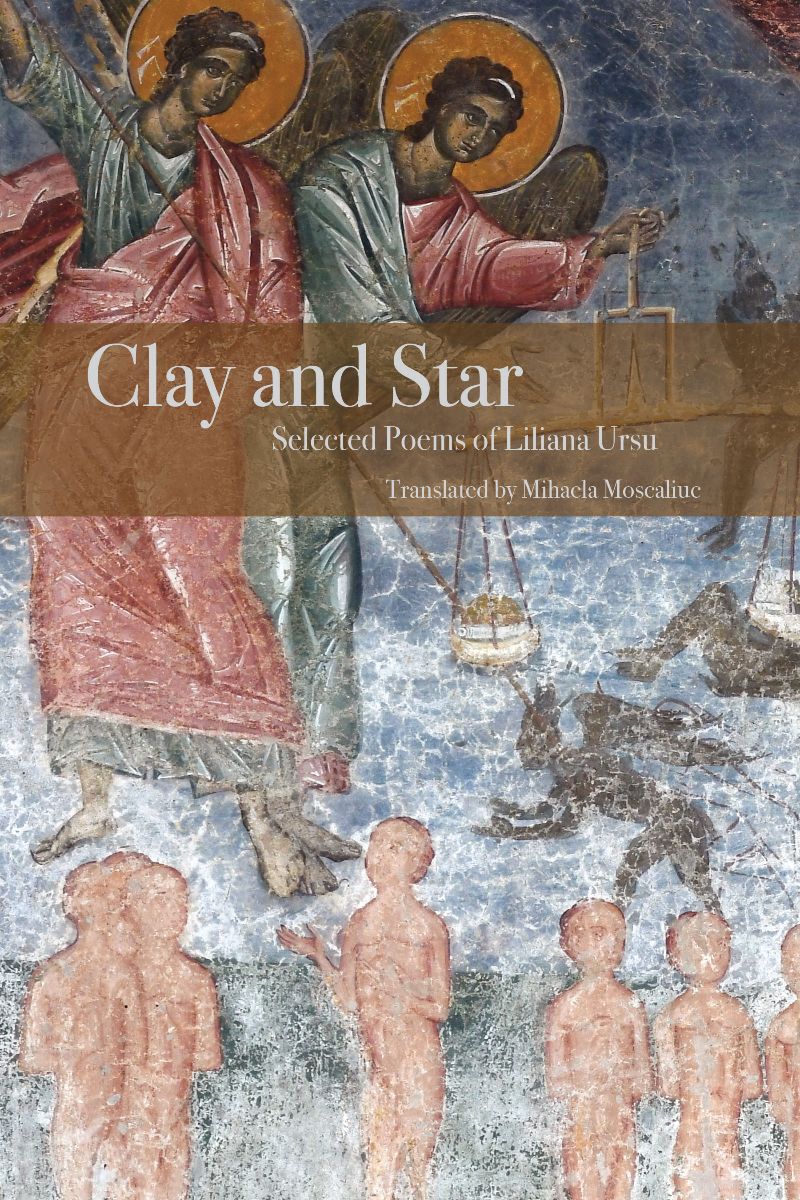
We are also proud to welcome Clay and Star: Selected Poems of Liliana Ursu, Translated by Mihaela Moscaliuc, to the Etruscan family.
In Clay and Star, Romanian poet Liliana Ursu captures with
breathtaking precision the convergence of the sacred with the mundane.
Whether anchored in Sibiu, Visby, Skala, or San Francisco, her poems
both honor and transcend place and time as they search obsessively for
essence, truths, self-knowledge, and the divine within.
|
|
|
A Life of Its Own:
A Conversation with the Etruscan Press Editors
by Jason Miller
|
|
|
Executive Director Phil Brady; Executive Editor Robert Mooney;
Managing Editor Bill Schneider; and Production Editor Pamela Turchin
|
|
Each year Etruscan Press releases six titles which require, at one time
or another in the publication process, the full-time care of each of the
four editors, as well as the contribution of various designers,
copyeditors, and graduate assistants, all of whom have a roll in
ushering a manuscript into its final form.
Production Editor Pamela Turchin, who earned her M.F.A. ('18) from the
Wilkes University Maslow Family Graduate Program in Creative Writing,
explains. “When we accept a manuscript, we don't immediately send it to a
printer and have the copies shipped to bookstores. It goes through a
lengthy process of proofs until final print. I don’t think you can
measure how many hours are devoted to each title, but a few aspects of
production are communicating with authors and designers to create the
perfect font, page layout, cover art, proofreading of each draft,
printing of advance reader copies, developing the marketing plan, and
creating the academic study guide. It takes about a minimum of 18
months to turn an original manuscript into a finished book.”
Managing Editor Bill Schneider, who also earned an M.F.A. (’14) from the
Wilkes Creative Writing Program, expanded on the discussion of the time
involved and how distance contributes to it. “Working with the myriad
personalities of those behind the scenes in a small press is the biggest
challenge, one that helps me appreciate the diversity of Etruscan
Press. Our designers and copyeditors work remotely from nine different
states, and our partners at Consortium and Ingram Publishing Services,
who help in marketing and distributing our titles, are housed in five
different locations. Add to this mix the 60 Etruscan authors who live in
20 states from California to Massachusetts, and countries outside of
the United States, including Cuba, Greece, Ireland, and the United
Kingdom. The mix of voices, cultures and genres is what makes Etruscan
the unique small press that it is.”
Schneider also speaks about the graduate program, where he serves as
associate director through its partnership with Etruscan. “The
affiliation between Etruscan and Wilkes has benefited from being part of
a writing community where everyone writes. A hallmark of the Wilkes
program is the integration of partnerships with agents, editors and
publishers. Etruscan has been fortunate to mentor graduate assistants
and interns who combine their academic experience with their writing
journey. My goal as managing editor is to provide a real-world literary
experience to our students as they refine the craft of writing.
Surrounded by books and authors challenges me as a reader to become a
better writer. This compliments my role as an educator.”
Executive Director Phil Brady and Executive Editor Bob Mooney are also
both faculty in the writing program. Mooney says, “I think Etruscan,
perhaps more than other small presses, is less a boutique and more the
combination of a craft barn and a hardware store. What sets us apart is
the ongoing facilitation of a rigorous and imaginative conversation
among genres. Fiction talks to poetry talks to various classes of
nonfiction in heightened debate that results in hybrids of expression.
Our three National Book Award Finalist books published within six years
is a note on the national literary bulletin board bespeaking the
excellence of our uniqueness.”
Brady shares his take on specific upcoming titles: “We are thankful for Sheryl St. Germain’s forthcoming 50 Miles,
a memoir about addiction and recovery. Sheryl visited Youngstown as our
Outreach visitor this past spring. We await Spring Ulmer’s Bestiality of the Involved, whose title speaks for itself, Sari Fordham’s Wait for God to Notice, which addresses colonialism in Uganda, Mihaela Moscaliuc's translations of the Roma poet Liliana Ursu, and Diane Raptosh’s Dear Z,
the third book of her comprehensive rewriting of America. There are
others coming, too. One which may speak for all of us is H. L. Hix’s
forthcoming Demonstrategy: The heading to ‘Article 1’ exhorts us to “Make another world, make this world otherwise.”
Mooney sees this concept at work in his involvement with Narrative4, a
literary society founded by author Colum McCann with the end goal of
promoting radical empathy though literature. “Literature is by its
nature first and foremost deeply involved in the enterprise of
cultivating empathy among the citizens of life on the planet. It is its
prime value to the human spirit, and the human spirit is what the best
literature speaks to. It is now, and has always been, its best ‘use.’
Narrative4, under the leadership of Colum McCann, is a terrific
organization. Promoting ‘radical empathy’ is at the core of Narrative4’s
mission, and I can think of few mission's nobler. With the ongoing
social fracturing occurring community-to-community around the globe,
splintering our common humanity into tribes and warring camps, what
greater mission can a devoted, emphatic humanist undertake? Etruscan is
part of that mission. All publishing concerns with integrity play a role
in this mission.”
Further, Brady believes these concepts led to the genesis of the press.
“Etruscan Press was founded in a conversation with novelist Robert
Mooney, asking whether poetry and prose were manifestations of the same
impulse, immersed in different practices and traditions, or if on the
other hand they were completely different arts, joined by the technology
of the alphabet.” Etruscan Press delves into this question
everyday.
Turchin also addressed this when we spoke. “Being a production editor
has affected me as a reader and a writer. It’s made me hyper-focused on
all stages of production, during and outside of work. I can still read
for pleasure, but I’ve found I can’t completely turn off the editor part
of my brain because I'm aware of all the other components that I didn’t
notice or pay much attention to before. When I open a book, I don't
turn right away to the first page and start reading. I know this might
sound nerdy or obsessive, but I do things like study the copyright page,
because it has more meaning to me. I never thought about the data from
the Library of Congress and how it is used to catalogue a book, but I
think about it now.”
Each Etruscan title takes on a life of its own, a life that begins
before submission and continues well after the printed book graces the
shelves of the local bookstore or arrives on your doorstep, representing
the passionate work of at least a dozen people who are committed to
provide you with literature that may, even in some small way, change
your life.
Jason Miller is pursuing his M.A. in playwrighting from the Maslow
Family Graduate Program in Creative Writing at Wilkes University where
he serves as a graduate assistant with Etruscan Press.
|
|
About Etruscan Press:
Housed at Wilkes University and partnering with Youngstown State
University, Etruscan is a non-profit literary press working to produce
and promote books that nurture the dialogue among genres, cultures, and
voices.
For the latest Etruscan events, please visit our website.
|
|
|
|
|
|
|
|
|