|
|
|
|
|
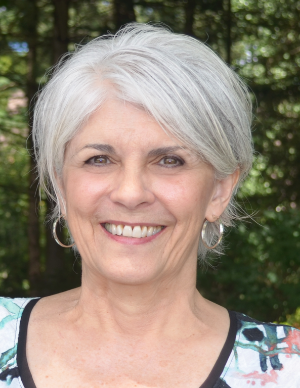
A New Silk Road: An Interview with Daneen Wardrop
|
|
|
Great literature takes many forms and can often involve extensive
research to create a piece that is accurate and also impacts the reader.
For her book of poetry entitled Silk Road, Etruscan author
Daneen Wardrop delved into the past to create poems that give readers a
view of the Silk Road from the perspective of an often forgotten
historical figure, Donata Badoer, the wife of Marco Polo. Silk Road offers an intimate perspective on historical events, while bringing to life the experience of a woman who feels contemporary.
When it came to the research involved in writing Silk Road, Wardrop
read various books and articles and immersed herself in the life of the
Silk Road. She says, though, that it was not a difficult or unenjoyable
process. “Some of us are NatGeo type nerds and some of us aren’t. I just happen to be guilty. I read Polo’s book, The Travels of Marco Polo, and supporting books. If anyone’s interested, there’s a slew of material: for instance, Laurence Bergreen’s 2007 Marco Polo: From Venice to Xanadu is eminently readable, and Sharon Kinoshita’s 2016 translation, The Description of the World offers a fresh perspective.
“I was lucky to visit Venice, which certainly contributed to research.
It was a boon to see the artwork first-hand—Venetian glass, paintings,
the narrow, mysterious streets. When you’re there it’s easy to
comprehend how the sea is everything. These days the sea is having its
way with Venice more and more. You can be sitting at an outdoor cafe and
feel a small fountain of ocean spray up by your table through a crack
in the cement.
“I also had the opportunity a few years ago to visit Suzhou, China, and
that was important research, too. Like Venice, Suzhou in the Middle Ages
was built on water, so is full of bridges, and was one of the most
mercantile cities in the world. The starting point of Silk Road
was a rising image of Suzhou’s and Venice’s bridges spanning cities and
continents in camaraderie, and that image was Donata’s
vision.”
Wardrop did not just decide to write about Donata out of the blue,
though. She describes it as if Donata was asking Wardrop to tell her
story. “Generally speaking, it feels like the persona chooses me. A
person from history will get under my skin to the point that I can hear
her voice, and when that happens I transcribe what she’s saying onto
paper. Some time ago I’d been reading a National Geographic
featuring Marco Polo and found myself attracted to his character…What
would it have been like to live with him and raise children, and also
create a life of your own? Donata Polo seemed to want to tell me that,
and I started scrawling.”
Why write a persona poem as Donata, though? Why not Marco Polo, or
someone else in their lives? “The personae who attract me are unknown or
relatively unknown people. Donata is mostly erased in history: born
Donata Badoer, she came from a prosperous Venetian family, married Marco
after he returned from his travels, and they had three daughters.
That’s about it, in terms of the information we have about her.”
Donata is not the first overlooked historical figure that Wardrop has written about. In her previous book, Cyclorama,
she wrote in the persona of a woman from the era of the United States
Civil War. “These were nurses, female soldiers, prostitutes, mothers,
officer’s wives. The subject of the Civil War is more written
about than any other subject, and yet there are relatively very few
portrayals of women. Women lived through that period every bit as much
as men…There’s still so much catch-up work to be done in terms of
gender, and where the historical record lacks precision, I think it’s
incumbent upon us to fill in the time line with responsible
imagination.”
Wardrop’s interest in the Silk Road started as a young girl, and has presented itself as a presence in her adult life with Silk Road.
“The phrase ‘silk road’ delighted me from when I was a kid. I
pictured it as a luscious throughway of fabric, perhaps an endless
shimmer in a fairy tale. At some point, of course, I learned that
it was a continental network of global exchange [of
commodities]…Horribly, enslaved people were also treated as commodities.
Though repelled by the violence that some transactions involved, I was
also heartened by the instances of people coming together through
trade…Not only were people of many countries involved but also of many
religions—Muslims, Christians, and Buddhists. That’s some serious
diversity.”
It was not only the concept of trade that pulled Wardrop in. She found
herself relating to Donata and Marco on a personal level. “I’m also
obsessed with how people cope with moving. I grew up moving about once a
year when I was a kid, and one tends to re-find one’s center as one
moves. Perhaps the need to re-find becomes more apparent when geography
makes inevitable that mutable center. The constant change of environment
and self is at the same time enlivening and wrenching. Marco seems to
have moved and changed with panache, lucky fellow.”
However, Wardrop finds the amount of wealth that the Polo family held in
reference to the rest of the population was astounding. “Donata Polo
lived in one of the most global, most affluent cities in the world
during her lifetime, and as a noblewoman…she would have found many goods
available to her. As a middle class American I certainly experience how
global riches are accessible to United States citizens, though of
course most of us can’t fully access such products in the way the ‘one
percent’ does.”
“On a more personal level, as a family member involved in international
adoption, I’m painfully aware of the discrepancies in prosperity in
different parts of the world and feel connected across the nations in
that way. China is more or less always my subject, or perhaps my subject
is always the bridge between two countries, or two people, or two
conditions of wellbeing, or suffering, or the travels we make in finding
each other. I understand these dynamics in terms of pragmatism and
emotion, both.”
Daneen Wardrop continues to entrance readers with her historical persona poems with Silk Road, bringing new life to the Silk Road and reminding us all of the effects of global trade in global and local terms. Silk Road reminds us that, while men may often be the face of history, they are not the only ones who experienced it.
Kelci Piavis is a former Etruscan intern and graduate of Wilkes
University. She explores worlds—both real and imaginary—with literature.
|
|
New Releases from Etruscan
|
|

|
We’re proud to welcome Daneen Wardrop’s Silk Road to the Etruscan Press family.
Silk Road is a collection of poems written in the persona of
Marco Polo’s wife, Donata Badoer, as she perceives a newly connected
world while attending to her everyday activities in Medieval Venice.
Donata Badoer lived an unrecorded life with her husband Marco and their
three daughters. While a plethora of material by and about Marco is
available, very little about Donata exists. Silk Road is
written in the voice of a figure who, effaced by history, compels the
act of reimagining as Donata turns in unbidden moments to perceive a
Venice accelerating from Mediterranean port to global hub. Donata’s
reveries arise in the breach between her home in Venice, Italy, and
Marco’s travels in Suzhou, China, prompting her to apprehend the ways
eastern and western hemispheres coincide and collide, the ways the
spice, silk, and jewel trades have resulted in the financing of warfare
and slavery, such apprehension affecting also her intimacy with her
husband. She perceives as well how the construction of stories, such as
those Marco tells, carry a power that affects the interchanges between
these newly intertwined worlds of East and West. Though Donata lives
during the middle ages, she thinks as a kind of global citizen, albeit
staying at home. Donata exists in the vivid divide between regions at
odds, even as her meditations find a geopolitical brace of camaraderie.
|
|
|

|
|
We’re also proud to welcome Brian Coughlan’s Wattle & daub to the Etruscan Press family.
At once hilarious and unsettling, Coughlan’s stories deftly probe at the darkness and absurdity of our lives.
The world of Wattle & daub is inhabited by mysterious and
peculiar creatures: a woman who fears the living thing in her apartment
walls; an office-based streaker with an axe to grind; automatons that
finally recognize their creator; a terminally ill man resorting to
hypnotism to quit smoking; the couple who conceive an alarm clock; a
dying brain unspooling receding memories of a funfair. Billy
O’Callaghan, author of The Things We Lose, The Things We Leave Behind,
says, “With this finely-wrought debut collection, Brian Coughlan proves
himself a master at catching those moments when the ordinary world
turns askew and stories twist into being. These are tales that bristle
with life, in the way that all the best ones should, and they will
assure readers, hopefully worldwide, that the fine and good tradition of
the Irish Short Story is alive and kicking. A hugely impressive first
book from a big talent.”
|
|
|
|
Etruscan Press Renews Affiliation with Wilkes University
|
|
Etruscan Press is proud to announce the
renewal of a three-year affiliation with Wilkes University. Housed on
the Wilkes campus since 2005, we continue to celebrate this shared
commitment to the continued growth of academic internship, stewardship,
and the enrichment of the community. Following are some of the
achievements Etruscan is proud to share with Wilkes University:
- Joined United Airlines Books on the Fly,
an outreach partnership at Boston Logan International Airport that
allows United customers to select books to read on cross-country
flights. The outreach initiative now includes books donated by Etruscan
Press and faculty from the Maslow Family Graduate Program in Creative
Writing at Wilkes University.
- Provided
study guides for educators to assist in reading comprehension, to offer
writing prompts for further exploration, and to nurture the dialogue
among genres, cultures, and voices.
- Etruscan
Press author Aaron Poochigian visited Wilkes earlier this year to
record the audiobook of his debut novel-in-verse, Mr. Either/Or (Etruscan
Press, 2017). The recording sessions were completed at WCLH, the Wilkes
University campus radio station facility located in the Karambelas
Media and Communication Center. In between recording sessions,
Poochigian observed Wilkes instructor Bernie Kovacs’ poetry writing
workshop, conducted a reading from Mr. Either/Or, and was interviewed by local newspapers The Citizens’ Voice and The Times Leader.
In between takes, he took some time out to explain his early love of
poetry and how this love came full circle in the recording of his book.
- Etruscan Prize awarded to Sarah Bedford of Hunlock Creek, PA for a work of memoir (judged by Etruscan author Bruce Bond)
|
|
About Etruscan Press:
Housed at Wilkes University and partnering with Youngstown State
University, Etruscan is a non-profit literary press working to produce
and promote books that nurture the dialogue among genres, cultures, and
voices.
For the latest Etruscan events, please visit our website.
|
|
|
|
|
|
|
|
|